Our Products

OIL TESTING INSTRUMENTS

Noack Evaporation Loss

ASTM D5800
CEC L-40-A-93
DIN 51581
IP 421
JPI-5S-41-04
NB/SH/T 0059

Determination of the evaporation loss of lubricating oils (particularly engine oils).Procedure A uses the Noack evaporative tester equipment.Procedure B uses the automated non-Woods metal Noack evaporative apparatus.

A quantity of 65 grams of sample is heated to a specific temperature and maintained for 1 hour while it is enclosed in a crucible, the crucible’s cover is shaped to allow a constant vacuum of -2 mbar to remove from the crucible the evaporating portion of the sample. At the end of the test, the sample is cooled and then reweighted: the difference, reported in percentage, represent the sample’s Evaporation Loss by the Noack Method. Method A: bath is controlled at 250°C. Method B: the sample is controlled at 245.2°C.

Flash point

Pensky Martens Close Cup

Pensky Martens Close Cup (Automatic)

Flash Point on petroleum products, gas oils, fuel oils, lubricants, biodiesel. Suitable for flash point detection on different substances, waste materials, solvents…

The sample is heated and stirred at specified rates, using one of three defined procedures (A, B, or C). An ignition source is directed into the test cup at regular intervals with simultaneous interruption of the stirring, until a flash is detected.

  • Temperatures: in °C
  • Measuring range: +35°C … +370°C
  • Resolution: 0.01 °C
  • Accuracy: ± 0.1 °C
  • Repeatability / Reproducibility: as per standards methods or better
ASTM D93 procedures A, B, C - ASTM D3941 - ASTM E502
DIN EN 22719, IP 34, ISO 2719
ASTM D93 procedures A, B, C - ASTM D3941 - ASTM E502
DIN EN 22719, IP 34, ISO 2719

Pensky Martens close cup (Semi-Automatic)

Flash Point on petroleum products, gas oils, fuel oils, lubricants, biodiesel. Suitable for flash point detection on different substances, waste materials, solvents…

  • Electrically heated by electronic regulator manually settable
  • Mounted on a case painted with anti-acid epoxy products
  • Calibrated brass crucible
  • Cup / cup cover with movement stand-by support
  • Cover with ignition device for gas propane/butane
  • Automatic shutter opening and dip-in of test flame by means of an electrical motor
  • Electrical motor stirrer with shut off during flame application
  • Digital display for sample temperature reading
  • PT 100 probe Class A for sample temperature measuring
  • Built in cooling fan
  • Measuring range from 15 to 370°C
  • Over heat protection

Pensky Martens close cup (Manual)

Flash Point on petroleum products, gas oils, fuel oils, lubricants, biodiesel. Suitable for flash point detection on different substances, waste materials, solvents…

  • Electrically heated by electronic regulator
  • Mounted on a case painted with anti-acid epoxy products
  • Calibrated brass crucible
  • Cover with gas ignition device allowing to ignite the testing sample by a manual trip-opening
  • Motor stirrer for Procedure A and B
  • Air bath made in brass with external stainless steel protection cover
  • PT 100 probe Class A for sample temperature measuring
  • Digital display for sample temperature reading
  • PT 100 probe Class A for sample temperature measuring
  • Measuring range from 15 to 370°C
  • Over heat protection
ASTM D93 procedures A, B, C - ASTM D3941 - ASTM E502
DIN EN 22719, IP 34, ISO 2719

Cleveland open cup

ASTM D92
DIN 51376
EN 22592 (obs.)
IP 36
ISO 2592

Cleveland open cup (Automatic)

Flash and Fire Point on petroleum products, gas oils, fuel oils, lubricants. Suitable for flash and fire point detection on different substances and waste materials, having a flash point over 79°C.

The sample is warmed up according the methods. When the sample reaches the selected test temperature, the flame is passed automatically above the sample. When the flash point is reached, the detection is done by an ionisation detector. For fire point detection, the sample continues to be heated until permanent flame is detected by the second PT100 probe, then the auto extinguisher will be placed on the top of the test cup.

  • Temperatures: in °C
  • Measuring range: +79°C … +400°C
  • Resolution: 0.06 °C
  • Accuracy: ± 0.1 °C
  • Repeatability / Reproducibility: as per standards methods or better

Cleveland open cup (Semi-Automatic)

Flash and Fire Point on petroleum products, gas oils, fuel oils, lubricants. Suitable for flash and fire point detection on different substances and waste materials, having a flash point over 79°C.

  • Metallic case structure painted with anti-acid products
  • Digital display for temperature reading with 0,1°C resolution
  • Temperature read by a stainless steel PT100 A class
  • Gas ignition device fitted with a motor operated pivot passing through the cup
  • Calibrated brass crucible with level line, handle and correct positioning support
  • Safety cover activated when flame/flash occur
  • Electrical ignitor/enlighter with intensity regulation knob and stand-by SS protection
  • Electric heater 500 Watt with main switch, power regulator and centring aluminium ring
  • Cooling fan with activation switch
  • Test button for check the instrument performance
  • Motorized up-down movement of sensor’s head, buttons operated
  • Internal solenoid valve for manage gas supply, activated by an external switch
  • Ionization detector rings with audible alarm
ASTM D92
DIN 51376
EN 22592 (obs.)
IP 36
ISO 2592
ASTM D92
DIN 51376
EN 22592 (obs.)
IP 36
ISO 2592

Cleveland open cup (Manual)

Flash and Fire Point on petroleum products, gas oils, fuel oils, lubricants. Suitable for flash and fire point detection on different substances and waste materials, having a flash point over 79°C.

  • Metallic case structure painted with anti-acid products
  • Electric heater 500 Watt with main switch, power regulator and centring aluminium ring
  • Calibrated brass cup with handle
  • Gas ignition device fitted with a manually operated pivot passing through the cup
  • Rod and clamp for thermometer

Cloud and Pour point

Cloud and Pour point (Automatic)

Cloud Point

The sample is cooled down according to the methods while the clouds appearance is observed on the silver bottom of the test jar by means of an optical sensor. The measurement is done by reflection on the silver bottom of the test jar via a fast light detector. The signal from light detector is traded by the LabLink software. The dynamic measurement is performed regardless of the sample’s colour.

Pour Point

According to the methods, the sample is cooled down at a specified rate and, at the prescribed temperature intervals, the mechanical arm of the analyser lifts the test jar from the cooling jacket and tilts it in order to bring it in horizontal position to test the flow of the product. The sample movement is detected by the thermal probes (PT100 detection) placed above the sample surface which react if touched by the cooled sample.

Measuring Parameters
  • Temperatures: in °C
  • Measuring range: +80°C … -80°C
  • Resolution: 0.06 °C
  • Accuracy: ± 0.1 °C
  • Repeatability / Reproducibility: as per standards methods or better
ASTM D5771
DIN 51597
EN 23015
EN 590
IP 444
Correlated:
ASTM D2500 - ASTM D5772 - ASTM D5773
IP 219 - IP 445 - IP 446
ISO 3015
JIS K2269
Pour Point:
ASTM D97 - ASTM D5853 - ASTM D5950 - ASTM D6074 - ASTM D6158
IP 15 - IP 441
ISO 3016
EN ISO 22995
ASTM D97 - ASTM D2500 - ASTM D5853 - ASTM D6922
DIN 51428 - DIN 51597
IP 15 - IP 219 - IP 309
ISO 3015 - ISO 3016

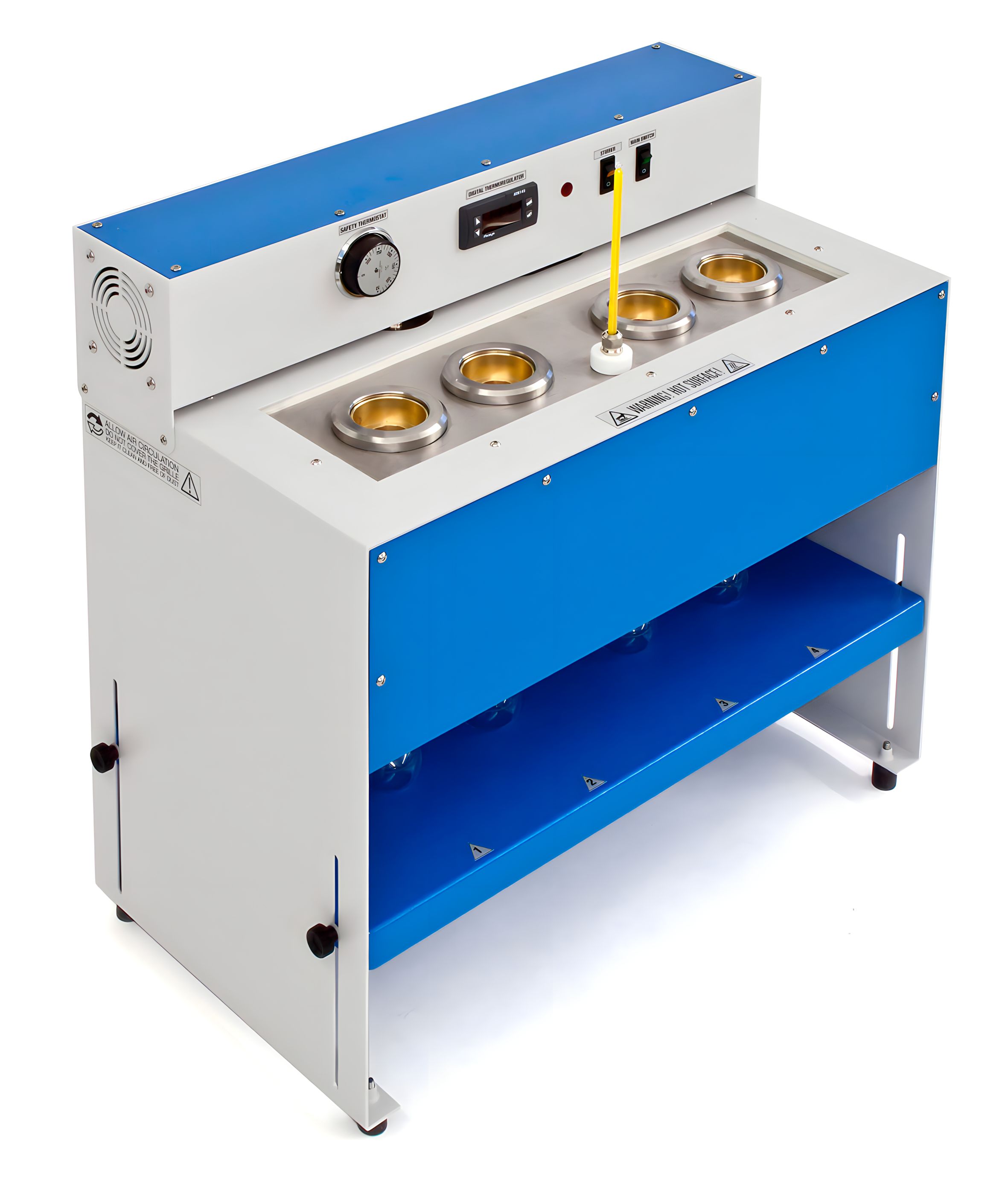
Cloud and Pour point (Manual)

This test method is intended for use on any petroleum product. Suitable for black specimens, cylinder stock, and non-distillate fuel oil and for testing the fluidity of a residual fuel oil at a specified temperature is described.

  • Bench top instrument with metallic case structure painted with anti-acid products and vibration-free feet.
  • Dry aluminium block bath with 4 wells for accommodation of glassware and a small 1 for thermometer.
  • Low-voltage anti-condensing system and 4 stand by covers made in plastic material
  • Motor compressor system with CFC free gases.
  • Digital thermo-regulator with PT100 A class grant resolution and precision of 0,1°C.
  • Available working temperature: from +60°C up to -69°C.

Foaming Tester

Foaming Tester (Automatic)

Foaming characteristics of lubricating oils: this test method covers the determination of the foaming characteristics of lubricating oils at 24°C and 93.5°C. Means of empirically rating the foaming tendency and the stability of the foam are described.
  • Electrically heated by electronic regulator
  • Mounted on a case painted with anti-acid epoxy products
  • Calibrated brass crucible
  • Cover with gas ignition device allowing to ignite the testing sample by a manual trip-opening
  • Motor stirrer for Procedure A and B
  • Air bath made in brass with external stainless steel protection cover
  • PT 100 probe Class A for sample temperature measuring
  • Digital display for sample temperature reading
  • PT 100 probe Class A for sample temperature measuring
  • Measuring range from 15 to 370°C
  • Over heat protection
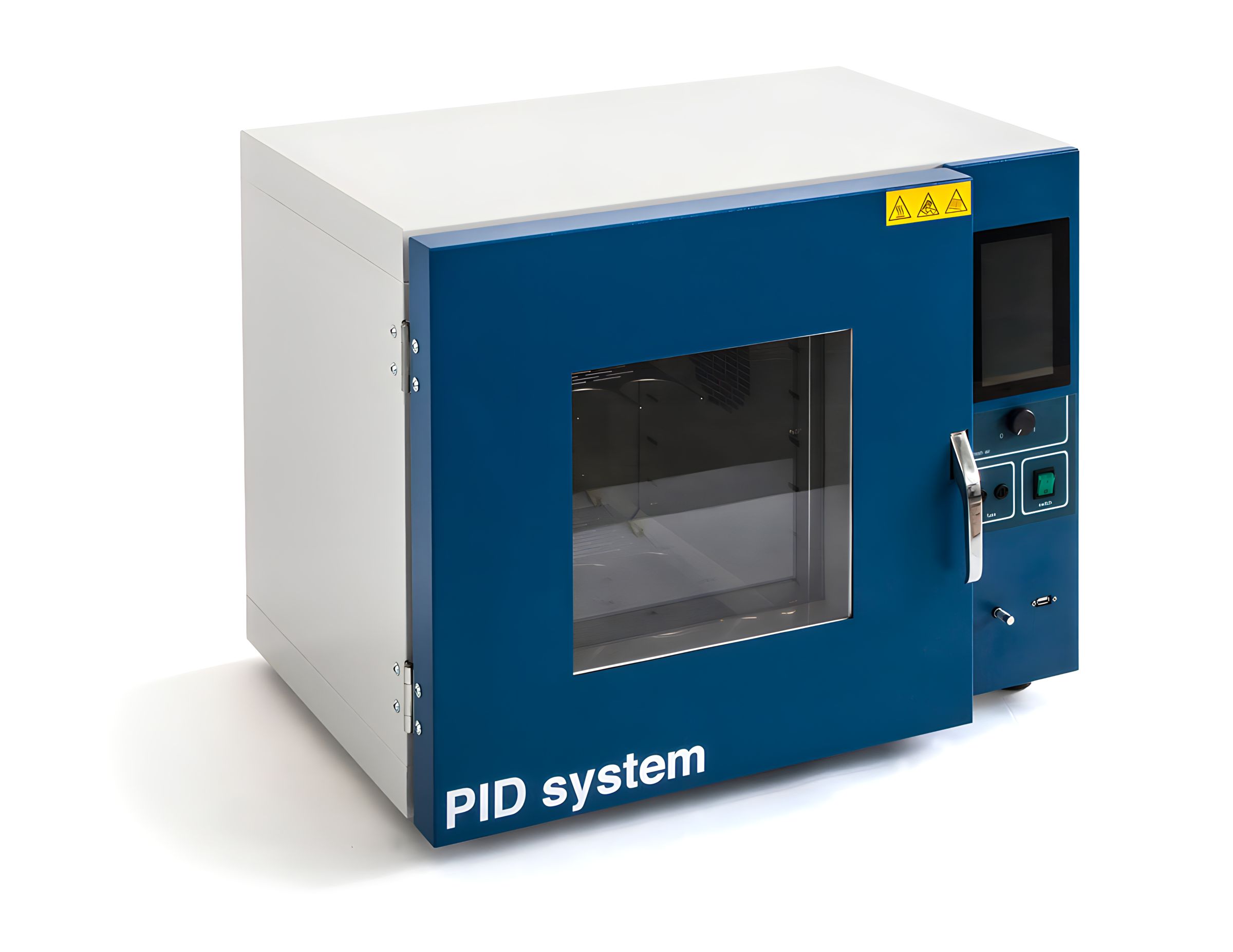
  • Four test position heated air bath for measuring the foaming tendencies of lubricating oils in the temperature range of +20 to +150°C.
  • Compact and robust analyzer painted with epoxy paint.
  • Automatic analyser as for ASTM D892 and ASTM D6082.
  • Long temperature probe is positioned for digital control and test sample temperature and precise temperature control during the foaming process.
  • 4 independent micro pump and 4 independent digital airflow meter indicating mass air flow with automatic flow controllers are used for precisely measuring and controlling the amount of air delivered to the air diffuser.
  • The airflow is controlled at either a rate of 94 or 200 ±5 mL/min, depending if testing by ASTM D892 or D6082, respectively.
  • The parameters are displayed during the test on the touch screen allows the operator selection and full adjustment of all test parameters.
  • The labLink software include operator name , filename, 4 independent analysis, diagnostic and calibration menu.
  • A multi-pane insulated window allows full view of the test cylinder for observation of the foam.
  • The unit is supplied with the built in cooling system made by integrated Peltier modules (LAB-510-18-01) able to maintain the chamber temperature below +24°C.
  • Internal rack able to accommodate 4 test cylinder with warm light.
  • The 7” PC with resolution of 480 x 800, 1 × usb port, equipped with the Lablink software with both ASTM D892 and D6092 test methods, for automatic start /stop soak time, audible alarm after completing soak time.
  • Precision as per test method requirements: ±0.5°C.
  • Equipment precision: ±0.1°C.
  • Temperature display definition: 0.01°C.
  • Max temperature as per test method requirements: 150°C.
  • Equipment maximum temperature: 180°C, in controlled lab temperature environment.
ASTM D892
ASTM D6082
DIN 51566
IP 146
ISO 6247
ASTM D892
DIN 51566
IP 146

Foaming Tester (Manual)

Foaming characteristics of lubricating oils: this test method covers the determination of the foaming characteristics of lubricating oils at 24°C and 93.5°C. Means of empirically rating the foaming tendency and the stability of the foam are described.

  • Compact structure painted with anti-acid epoxidy products with 2 double standby support for rubbers and air diffuser glass tubes.
  • 2 independent bath insulated and equipped with 2 wide double windows equipped with illuminating LED barriers.
  • 2 drain tap.
  • Air coil placed into the bath at 24°C with the output placed on the left side for the air volume control.
  • Cover with 4 holes for the accommodation of up to 4 foaming test cylinders.
  • Cooling coil.
  • On the front the 4 flowmeter with regulating knob grant the easy adjustment of the air flow as foreseen by the method.
  • On the base 2 digital thermoregulator with PID (one for 24°C and one for more than 93.5°C) with over-temperature alarm and probe PT100A.
  • Heating supplied by stainless steel heater.
  • Main switch, 2 safety thermostat for overheating, 4 button to activate the 4 built in low voltage micro pump.
  • Motor stirrer.
  • Four graduated cylinders.
  • 4 diffuser stones (not certified).
  • 4 rubber stoppers, 4 air diffuser tubes.
  • Cord cable
  • User manual

Centrifuge

  • Touch screen easy to read Rotor and adapters list on memory
  • Timer count up/down, from 0 or at "set RPM/RCF"
  • Progressive acceleration and braking selectable
  • Lid locking and holding and lid dropping protection
  • Microprocessor controlled
  • Program data protection through password selectable
  • Induction motor maintenance free
  • Max. speed 3.000 RPM / 2.425 RCF
  • Quiet: noise level low than 60 dB
  • 15 memories + pre-heating program and overheating protection
  • Heating program from room +5°C up to +80°C, selectable scale °C / °F.
ASTM D91 - ASTM D96 (obs.) - ASTM D483 - ASTM D893 - ASTM D1093 - ASTM D1290 - ASTM D1796 - ASTM D1966 - ASTM D2273 - ASTM D2709 - ASTM D2711 - ASTM D4007IP 75 (obs.) - IP 359DIN 51793

Distillation

ASTM D86 - ASTM D216 (obs.) - ASTM D447 (obs.) - ASTM D850 - ASTM D1078 - ASTM E133
DIN 51751
IP 123 - IP 195
ISO 3405

Distillation (Semi-automatic)

This test method covers the atmospheric distillation of petroleum products using a laboratory batch distillation unit to determine quantitatively the boiling range characteristics of such products as natural gasolines, light and middle distillates, automotive spark-ignition engine fuels, aviation gasolines, aviation turbine fuels, 1-D and 2-D regular and low sulphur diesel fuels, special petroleum spirits, naphthas, white spirits, kerosines, and Grades 1 and 2 burner fuels. The test method is designed for the analysis of distillate fuels; it is not applicable to products containing appreciable quantities of residual material.

  • Structure fully made in stainless steel
  • Front panel including manual controls for heating power, fan activation and main power supply
  • Plate supported by a base whose height is adjustable with an elevation mechanism controlled by an external knob
  • Controlled by a digital thermoregulator with PT100 A class temperature sensor
  • PID range from ambient to +450°C, resolution 0,1°C
  • 3 programmable set points for Gasoline, Kerosene, Gasoil for semiautomatic operation mode
  • Infrared heaters 1300 Watt with ceramic-glass plate support
  • Fire extinguisher system composed by:
    • 1. solenoid valve
    • 2. red emergency push button
    • 3. dedicated line internally placed with holes for the emission of the fire extinguisher product with joint for the external connection
  • Wide toughed glass squared window and stainless steel cover with hole for flask neck
  • Cooling fan manually activated for cooling down the glass after analysis
  • Refrigerated condensing unit fully made in stainless steel with double chamber insulation:
    • 1. condensing tube made in stainless steel
    • 2. insulated cover with handle and hole for accommodation of the thermometer with relevant support and liquid level indicator
    • 3. integrated cooling system granting temperature from 0 to +60°C
    • 4. controlled by a digital thermoregulator with PT100 A class temperature sensor with resolution 0,1°C, stirrer motor grant homogeneity/uniformity
    • 5. rear connection for coolants circulation, over flow tube and atmospheric drain cock
    • 6. white background panel for easier reading of the receiver glass cylinder level mark

Distillation (Manual)

This test method covers the atmospheric distillation of petroleum products using a laboratory batch distillation unit to determine quantitatively the boiling range characteristics of such products as natural gasolines, light and middle distillates, automotive spark-ignition engine fuels, aviation gasolines, aviation turbine fuels, 1-D and 2-D regular and low sulphur diesel fuels, special petroleum spirits, naphthas, white spirits, kerosines, and Grades 1 and 2 burner fuels. The test method is designed for the analysis of distillate fuels; it is not applicable to products containing appreciable quantities of residual material.

Manual instrument for distillation composed by:

  • Structure fully made in stainless steel
  • Front panel including manual controls for heating power, fan activation and main power supply
  • Plate supported by a base whose height is adjustable with an elevation mechanism controlled by an external knob
  • Electric heater 1200 Watt with ceramic-glass plate support
  • Wide toughed glass squared window and stainless steel cover with hole for flask neck
  • Cooling fan manually activated for cooling down the glass after analysis
  • Condensing unit fully made in stainless steel with double chamber insulation:
    • 1. Condensing tube made in stainless steel
    • 2. Insulated cover with handle and hole for accommodation of the thermometer with relevant support and liquid level indicator
    • 3. Rear connection for coolants circulation, over flow tube and atmospheric drain cock
    • 4. White background panel for easier reading of the receiver glass cylinder level mark
ASTM D86 - ASTM D216 (obs.) - ASTM D447 (obs.) - ASTM D850 - ASTM D1078 - ASTM E133
DIN 51751
IP 123 - IP 195
ISO 3405

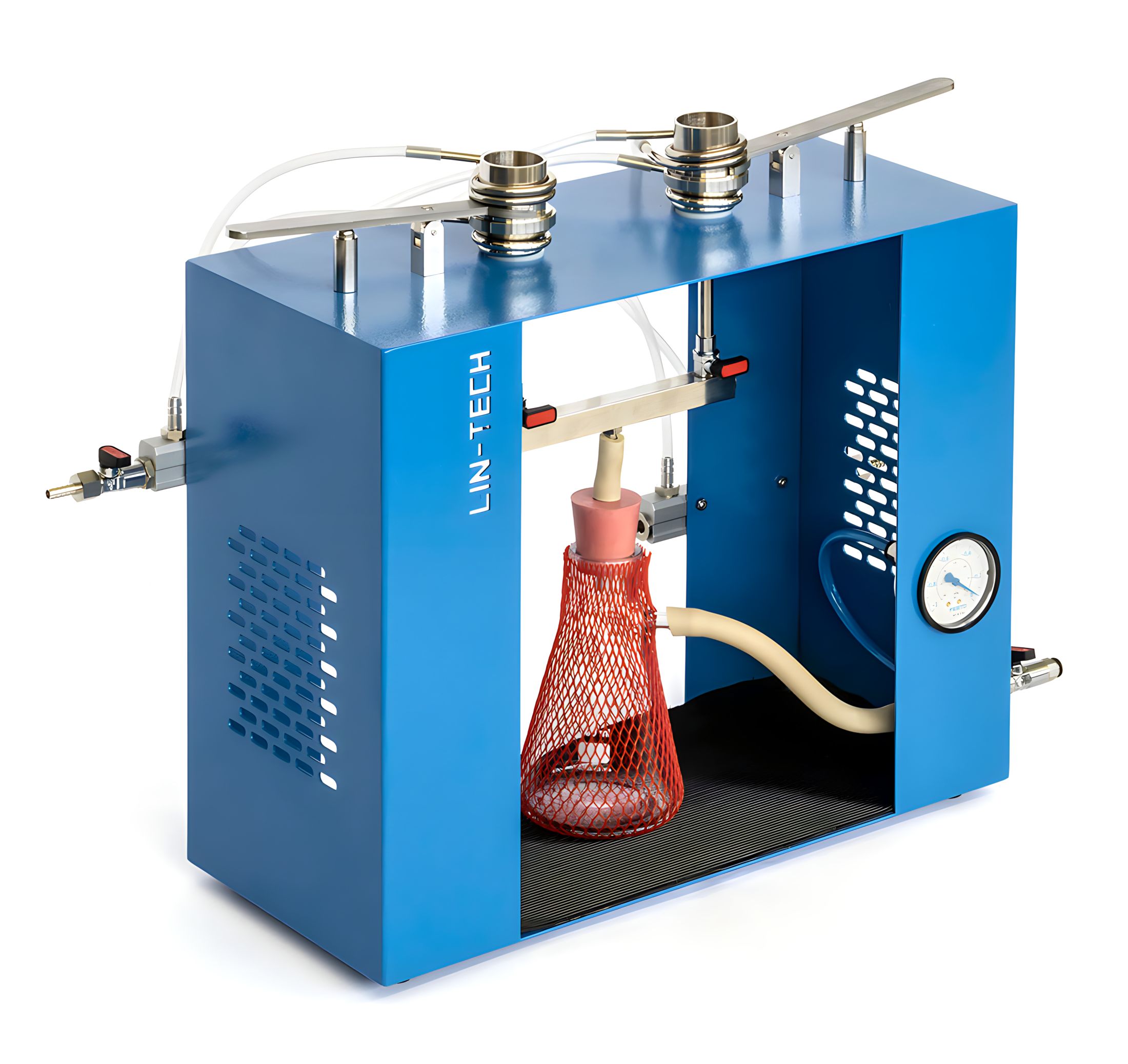
Total Sediment Tester

ASTM D4870
IP 375 - IP 390 (proc.A)
ISO 10307

This test method covers the determination of total sediment up to 0.40 % m/m for distillate fuel oils containing residual components and to 0.50 % m/m in residual fuel oils having a maximum viscosity of 55 cSt (mm2/s) at 100°C.

  • Structure in stainless steel
  • Two filtration groups
  • Throttle valve
  • Heating or cooling coil
  • Pipes for steam
  • Water and vacuum
  • 500 ml flask fitted with protection
  • Vacuum manometer

Oxidation Stability

Oxidation Stability (Automatic)

  • ASTM D525 - IP 40 - EN ISO 7536 - Oxidation Stability of Gasoline (Induction Period Method) This test method covers the determination of the stability of gasoline in finished form only, under accelerated oxidation conditions.
  • ASTM D873 - Standard Test Method for Oxidation Stability of Aviation Fuels (Potential Residue Method) This test method covers the determination of the tendency of aviation reciprocating, turbine, and jet engine fuels to form gum and deposits under accelerated aging conditions.
  • ASTM D942 - Oxidation Stability of Lubricating Greases by the Oxygen Pressure Vessel Method This test method determines resistance of lubricating greases to oxidation when stored statically in an oxygen atmosphere in a sealed system at an elevated temperature under conditions of test.
  • Compact structure painted with anti-acid epoxidy products.
  • Single aluminium dry bath deeply coated, insulated and equipped with multi electrical heaters grant uniformity and stability.
  • Upper cover equipped with 2 holes for test cells accommodation, un-used positions can be covered with stand-by covers that prevents heat loss, the cover is made in stainless-steel for easy cleaning.
  • Linetronic Management software running on 8” High-brightness 800cd/m² TFT with resolution 1024 × 768:
    • 1. Pre-setting for method ASTM D525/ D873/ D942, or customizable analysis parameters;
    • 2. Single settable bath temperature and controlled by PT100 A Class with 0,1°C precision, automatic for method selected or custom temperature;
    • 3. Calibration menu, result browser, dual level password protection;
    • 4. More than >60’000 analysis storage capacity;
    • 5. 2 × USB for connecting: mouse, keyboard and software updates;
    • 6. 1 × RJ45 Ethernet / Lims connection;
    • 7. Integrated beeper for end-test notification / errors
    • 8. Export file in .xls format
  • Dedicated software for real time monitoring and recording that includes:
    • 1. Display of the pressure in bar / psi / Kpa;
    • 2. Graph creation in real time during the test;
    • 3. Invalid test indication in case of pressure leakage;
    • 4. Export of files in xls. / .pdf / jpg. format;
    • 5. Calibration up to 100 points.
  • Oxygen filling system with manual needle valve, analog manometer and filling tube, rear connection permit to joint to external Oxygen line (mandatory)
  • ambient to +150°C or +302°F
  • precision 0.1°C
ASTM D525
ASTM D873
ASTM D942
IP 40
EN ISO 7536
ASTM D525 - ASTM D873
DIN 51780 - DIN 51799
IP 40 - IP 138
ISO 7536

Oxidation Stability (Manual)

ASTM D525 - IP 40 - DIN 51780 - ISO 7536 - Oxidation Stability of Gasoline (Induction Period Method) This test method covers the determination of the stability of gasoline in finished form only, under accelerated oxidation conditions.

ASTM D873 - IP 138 - DIN 51799 - Oxidation Stability of Aviation Fuels (Potential Residue Method) This test method covers the determination of the tendency of aviation reciprocating, turbine, and jet engine fuels to form gum and deposits under accelerated ageing conditions.

  • Completely made in stainless steel
  • About 30 litres capacity
  • Heated by electric stainless steel heater controlled by a thermoregulator
  • Cover serves as condenser with connections for water circulation
  • Temperature range: ambient to 100°

Aniline Point

Aniline Point and Mixed Aniline Point of Petroleum Products and Hydrocarbon Solvents. Test method E describes a procedure using an automatic apparatus suitable for the range covered by test methods A and B.

  • Automatic unit able to measure products with ASTM color less than 8
  • Automatic movement of the head up and down
  • Electric heater controlled by PID system and on-board cooling system with liquid peltier exchanger grant the following temperature: -10…+160°C
  • Heating /cooling dry bath for more safety
  • Removable glass cell for cleaning
  • Not aniline is touched by the operator: a small hole on the head support is used for the introduction of the aniline by syringe with luer lock (10 ml) when the glass cell with sample is already installed
  • Wide 8" touch panel pc is installed with dedicated managing software Aniline programs as for standard heating and cooling profile and costums procedure available
  • Temperature probe fiber optic and mirror are inside the sample and not outside the glassware
  • Automatic stirrer made of brass, 3 coils
  • Solid structure painted with anti-acid epoxy products
  • Double detection system able to detect dark and clear samples
  • Managed by a touch screen panel PC:
    • 1. TFT/LCD 8”
    • 2. 40 Gb HD
    • 3. resolution 1024 × 768 and 16 M colours
    • 4. 2 × USB Ports for connecting pen drive and printer
  • The dedicated software manages:
    • 1. The bath temperatures by means of a PT100 sensor class A that can be displayed in °C / °F, including the over temperature safety alarm
  • Dedicated software for real time monitoring and recording that includes:
    • 1. graph creation in real time during the test
    • 2. invalid test indication
    • 3. export of files in xls / pdf / jpg format
    • 4. calibration up to 100 points
ASTM D611-E
IP 2-E

Correlated to :
ASTM D611-A, B, C, D
IP 2-A, B, C, D

Air Release

ASTM D3427
IP 313
ISO 9120

Standard Test Method for Air Release Properties of Hydrocarbon Based Oils. This test methods cover the ability of turbine, hydraulic and lubricating oils to separate entrained air.

Compact bench instrument is fully independent, equipped in standard with density measurement system, heater, temperature control system, pressure regulation and microprocessor-based control system and other devices to assure perfect performance in all range of application. Design of the instrument is very easy to use and allows even inexperienced operator to perform routine tests.

  • Automatic instrument with pre-programmed software for execute analysis in conformity with ASTM D3427, IP313 and ISO9120.
  • Automatic diagnostic of position and sensors as well as automatic calibration procedure.
  • Integrated liquid conditioning system for test temperatures between +25°C and +85°C with accuracy of 0,1°C.
  • Automatic conditioning of air from ambient up to +75°C with accuracy of 0,5°C.
  • PT100 sensors class A able to monitor temperature of Air/Liquid/Oil sample with an accuracy of 0,1 °C.
  • Instrument is equipped with automatic movement of glassware; no operator time is needed during analysis to perform changes in positions.
  • Audible alarm when glassware is on movement.
  • Integrated balance assures automatic density reading by using glass sinker 5 and 10 ml with accuracy < 0,5 Kg/m³, temperature control device grant temperature between +25°C and +75°C.
  • Test vessel made in tempered glass, composed by external test tube with graduation at 175, 180 and 185 ml, and internal air diffuser tube with bubble dispersion baffle.
  • Integrated analysis timer with 0,1 sec precision.
  • Safety system with audio-visual signals against overpressure, overtemperature, lack of air flow and low liquid level.
  • Real-time graph creation for density and temperature over the time.
  • Unit is managed by an integrated computer with high visibility 10” touch screen:
    • 1. Internal memory capable of storing up to 30’000 tests
    • 2. High brightness and resolution 1280 × 800 dpi
    • 3. 2 × USB ports, 1 × RJ45 Ethernet / Lims
  • Software features:
    • 1. Possibility to change pressure unit between: bar / Psi / kpa
    • 2. Possibility to change temperature unit between: °C / °F
    • 3. Files export in .xls format

RPVOT

ASTM D942 - Standard Test Method for Oxidation Stability of Lubricating Greases by the Oxygen Pressure Vessel Method. This test method determines resistance of lubricating greases to oxidation when stored statically in an oxygen atmosphere in a sealed system at an elevated temperature under conditions of test.

ASTM D2272 - Standard Test Method for Oxidation Stability of Steam Turbine Oils by Rotating Pressure Vessel. This test method utilizes an oxygen-pressured vessel to evaluate the oxidation stability of new and in-service turbine oils having the same composition (base stock and additives) in the presence of water and a copper catalyst coil at 150°C.

ASTM D4742 - Standard Test Method for Oxidation Stability of Gasoline Automotive Engine Oils by Thin-Film Oxygen Uptake (TFOUT). This test method evaluates the oxidation stability of engine oils for gasoline automotive engines. This test, run at 160 °C, utilizes a high pressure reactor pressurized with oxygen along with a metal catalyst package, a fuel catalyst, and water in a partial simulation of the conditions to which an oil may be subjected in a gasoline combustion engine. This test method can be used for engine oils with viscosity in the range from 4 mm2/s (cSt) to 21 mm2/s (cSt) at 100 °C, including re-refined oils.

ASTM D7098 - Standard Test Method for Oxidation Stability of Lubricants by Thin-Film Oxygen Uptake (TFOUT) Catalyst B. This test method covers the oxidation stability of lubricants by thin-film oxygen uptake (TFOUT) Catalyst B. This test method evaluates the oxidation stability of petroleum products, and it was originally developed as a screening test to indicate whether a given re-refined base stock could be formulated for use as automotive engine oil (see Test Method D4742). The test is run at 160 °C in a pressure vessel under oxygen pressure, and the sample contains a metal catalyst package, a fuel catalyst, and water to partially simulate oil conditions in an operating engine. In addition, the test method has since been found broadly useful as an oxidation test of petroleum products.

IP 229 - Relative Oxidation Stability by Rotating Bomb of Mineral Turbine Oil (RBOT). This method covers a rapid means for estimating the oxidation stability of new turbine oils having the same composition.

His compact dimensions 35 × 38 × 41 cm and relative light weight only 25 Kg can assure an easy handling and find space above each table.

  • Display pressure in bar/psi/Kpa
  • Real time graph creation
  • Export file in xls, jpg and pdf format
  • 5 pre-charged methods (12 / 24 / 48 / 96 and 192 hours)
ASTM D942
ASTM D2272
ASTM D4742
ASTM D7098
IP 229

RVP

ASTM D323
ASTM D4953
IP 69
ISO 3007

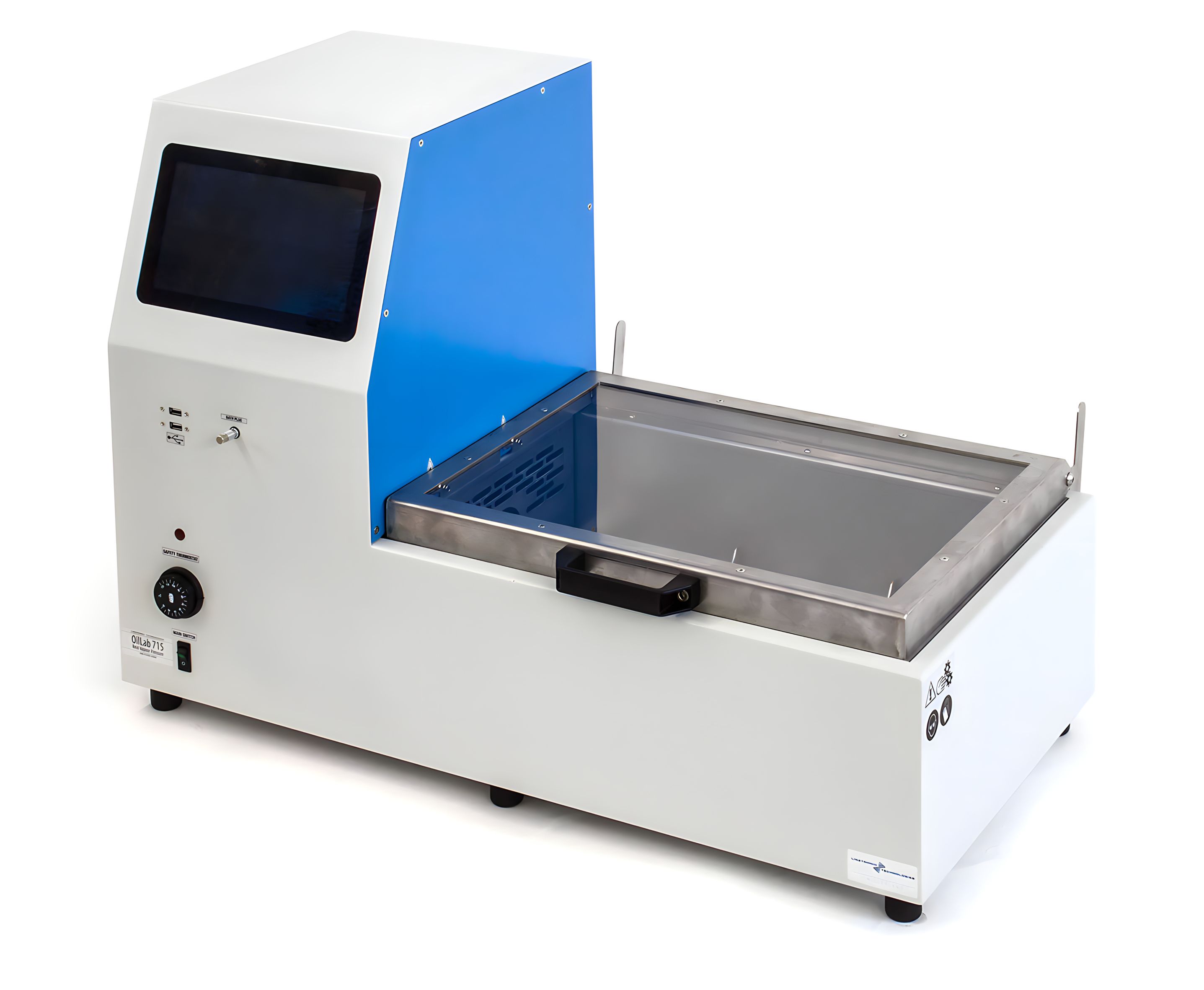
ASTM D323 - IP 69 - ISO 3007 Vapour Pressure of Petroleum Products (Reid Method) The test method covers the determination of vapour pressure of gasoline, volatile crude oil, by means of three procedures: A, B and C. The OilLab 715 grant the determination in conformity with the procedure B (horizontal bath) on petroleum products having Reid Vapour Pressures below 180 kPa (26 psi).

ASTM D4953 Standard Test Method for Vapor Pressure of Gasoline and Gasoline-Oxygenate Blends This test method covers and is applicable to gasolines and gasoline-oxygenate blends with a vapor pressure range from 35 kPa to 100 kPa (5 psi to 15 psi). This test method, a modification of Test Method D323 (Reid Method), provides two procedures to determine the vapor pressure of gasoline and gasoline-oxygenate blends.

  • Bath made in stainless steel suitable for the accommodation of up to two (2) vapour pressure cylinders according to ASTM specifications
  • Bath temperature range from ambient to +80°C ±0.1°, filling level 20 litres
  • Analysis range from 0 up to 250 kPa
  • Motorized stirrer with shaft , drain tap
  • Electric immersion heater controlled by PID system
  • Drive system for swing gently the vessel in horizontal position
  • Secure handle cover for open bath
  • Bath equipped with a Touch screen panel PC
    • 1. TFT/LCD 8”
    • 2. 40 Gb HD
    • 3. Resolution 1024 × 768 and 16M colours
    • 4. 2 × USB Ports for connecting pen drive and printer
  • The dedicated software manages:
    • 1. The bath temperatures by means of a PT100 sensor class A that can be displayed in °C / °F, including the over temperature safety alarm
    • 2. 2 (two) electronic sensors, pressure transducers / electronic pressure gauges supplied for the coupling to the test vessels
  • Cables and connectors
  • Dedicated software for real time monitoring and recording that includes:
    • 1. Display of the pressure in bar / psi / Kpa
    • 2. Graph creation in real time during the test
    • 3. Invalid test indication
    • 4. Export of files in xls / pdf / jpg format
    • 5. Calibration up to 100 points
  • Power supply: 220Vac 50/60Hz

GREASE TESTING INSTRUMENTS

Penetration

Penetration (Automatic)

ASTM D5, IP 49, DIN 52010Penetration of bituminous material.For determination of the penetration of semi-solid and solid bituminous materials.

ASTM D217, ASTM D1403, IP 50, IP 310, DIN 51804, ISO 2137 - Cone penetration of lubricating grease. Cover four procedures for measuring the consistency of lubricating greases by the penetration of a cone of specified dimensions, mass and finish.

ASTM D937, IP 179, DIN 51580, ISO 2137 - Cone penetration of petrolatum. Covers measuring with a penetrometer the penetration of petrolatum as an empirical measure of consistency.

ASTM D1321, IP 376, DIN 51579 - Needle penetration of petroleum waxes. Covers the empirical estimation of the consistency of waxes derived from petroleum by measurement of the extent of penetration of a standard needle. This test method is applicable to waxes having a penetration of not greater than 250.

ASTM D1831 - Roll stability of lubricating grease. Covers determination of the changes in the consistency, as measurably cone penetration, of lubricating greases when worked in the roll stability test apparatus.

ASTM D2884 - Yield stress of heterogeneous propellants by cone penetration method. Covers determination of the yield stress of heterogeneous propellants, both of the gel and emulsion types, containing from 0 to 70% solid additives.
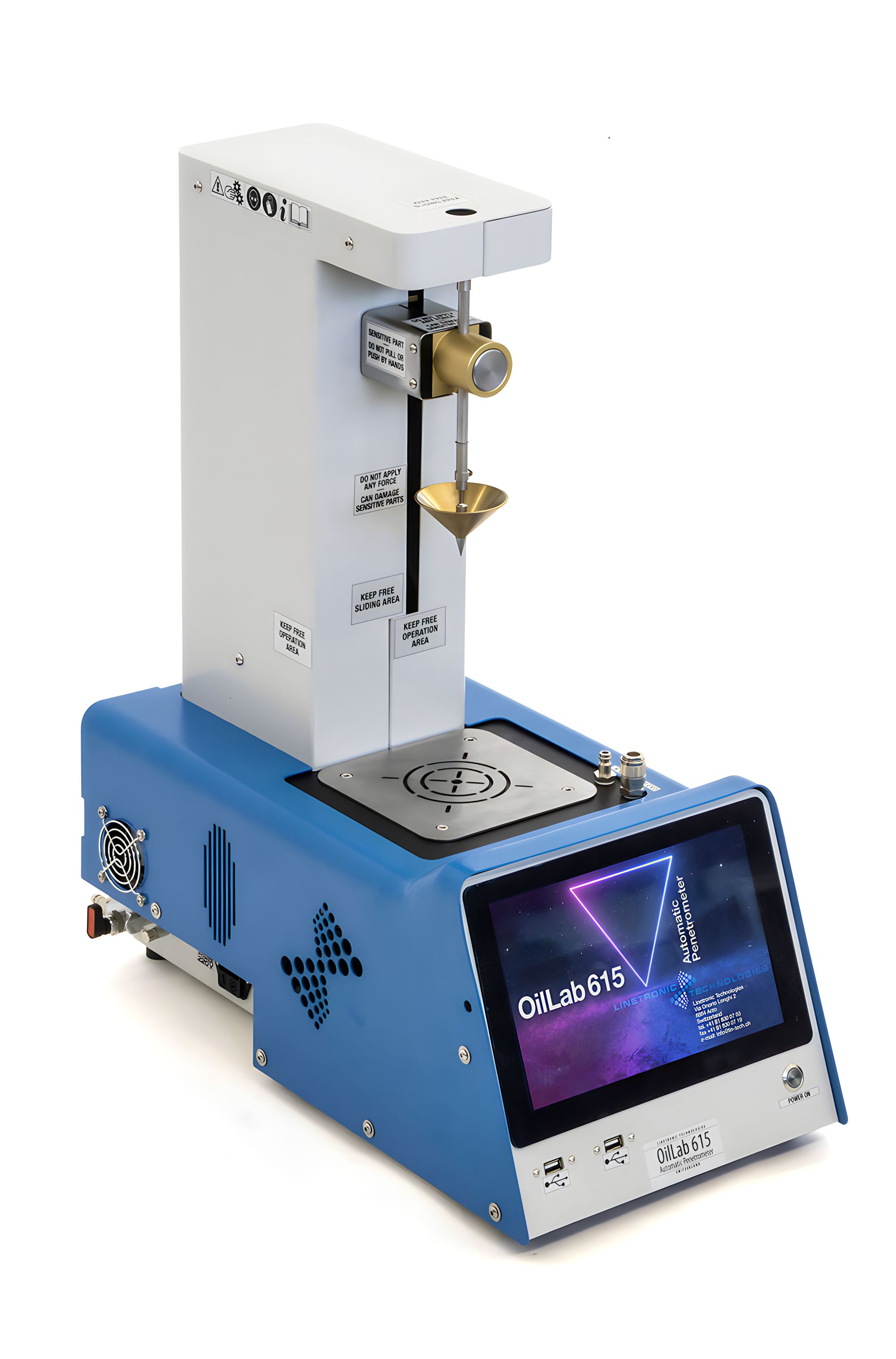
  • Bench top instrument compact and solid structure painted with anti-epoxy products, include the refrigerator system able to cool down 10°C sub-ambient temperature and dedicated electronic boards.
  • Analytical head made in aluminium and corrosion resistant plastics, advanced automatic up-down movement and sample surface positioning system, penetration range up to 75 mm.
  • Regulable led light and mirror.
  • Water bath for conditioning sample with quick-joints.
  • Safety systems: low level liquid alarm and protection, head malfunctioning movement, protection against needle/cone not installed, stand-by module for energy saving.
  • Linetronic Management software running on 10.1” high-brightness 800cd/m2 TFT with resolution 1280 × 700:
    • 1. pre-setting for method ASTM, DIN, IP and ISO, or customizable analysis parameters
    • 2. advanced surface detection with adjustable sensitivity
    • 3. settable bath temperature and controlled by PT100 A Class with 0,1°C precision, automatic for method selected or custom temperature
    • 4. calibration menu, result browser, dual level password protection
    • 5. more than 60’000 analysis storage capacity
    • 6. 2 × USB for connecting: mouse, keyboard and software updates
    • 7. 1 × RJ45 Ethernet / Lims connection
    • 8. integrated beeper for end-test notification / errors
    • 9. real time graph for comparing penetrations values, export file in .xls format
  • Plunger 47.5 g
  • ASTM D217 optional cone
  • With spirit level and adjustable foots
ASTM D5
ASTM D217
ASTM D937
ASTM D1321
ASTM D1403
ASTM D1831
ASTM D2884
DIN 51579
DIN 51580
DIN 51804
DIN 52010
IP 49
IP 50
IP 179
IP 310
IP 376
ISO 2137
ASTM D5, D217, D937, D1321, D1403, D1831, D2884

Penetration (Manual)

  • Metallic base with inset spirit level and adjustable feet
  • Stainless steel column supporting a calibrated dial with 360 divisions corresponding to 1/10 of mm and release button with manual halting function.
  • 47.5 gr plunger in stainless steel
  • Check light

Grease Worker

Grease Worker (Automatic)

Cone penetration of lubricating grease. Cover four procedures for measuring the consistency of lubricating greases by the penetration of a cone of specified dimensions, mass and finish.

ASTM D217 - ASTM D1403
Slave Unit ASTM D217 - D1403

Grease Worker (Manual)

  • For manipulating fats manually

Dropping point

  • Metal structure painted with anti-epoxy varnish with frontal stainless-steel opening for easily check the 6 test positions.
  • Insulated 6 places aluminium furnace block for heat up to +400°C.
  • 6 vertical apertures for the introduction of the sample tubes with spherical end for easily cleaning.
  • Viewing chambers illuminated by a cold light lamp.
  • Temperature controlled by a digital thermoregulator PID with overtemperature alarm and probe PT100 A class with 0.1°C resolution and 0.5°C precision.
Manual Apparatus for Dropping Point of Lubricating Grease, ASTM D2265 – D4950

BITUMEN TESTING INSTRUMENTS

Saybolt Viscometer

ASTM D88 - ASTM D7496 - ASTM E102
IP 55
FTM 791-0304
JIS K 2207

Digital Saybolt Viscometer ASTM D88, ASTM E 102 - 4 places

  • Water bath made in stainless steel 18/8, insulated double wall, front opened jacket
  • Digital thermoregulator PID with over temperature alarm and PT100 A probe
  • Atmospheric drain with drain cock Lid with stainless steel heater
  • Cooling coil with relevant joints for the connection to an external cooling source
  • Calibrated brass oil cup (1 cup for each test place included) suitable for stainless steel flowing orifice Universal and Furol, polished and calibrated

Ductilometer

The ductility of a bituminous material is measured by the distance to which it will elongate before breaking when two ends of a briquet specimen of the material are pulled apart at a specified speed and at a specified temperature. Unless otherwise specified, the test shall be made at a temperature of 77 ± 0.9°F (25 ± 0.5°C) and with a speed of 5 cm/min ± 5.0%. At other temperatures the speed should be specified.

Ductility of Bituminous Materials Electric and Refrigerated - ASTM D113

  • Bench top instrument completely made in stainless-steel and double chamber insulation.
  • Internal stainless-steel bath with capacity of approximately 55 liters, equipped with double-insulation and fully immersion stainless-steel heater.
  • Temperature controlled by a digital thermoregulator with PID functions that control the temperature trough an A class PT100 sensor in the range from ambient to +50°C, resolution 0,1°C and stability ± 0.1°C (with cover).
  • Double pump system with gently movement of liquid avoid ripple on sample surface.
  • Gas CFC free refrigeration system allow to cool down the bath to +5°C.
  • Three-place stainless steel structure with a motion of 1500 mm, transmission of 10 rev. on square-thread traction rod with speed 5 cm/min. by monophasic motor 220 Watt with reduction.
  • Stainless-steel / plexiglass cover preventing evaporation and disturbance during the test.
  • Lateral drain valve for easily emptying the bath.
  • Safety thermostat.
  • Included with instrument
    • 1. 3 × ductility form for ASTM D113;
    • 2. o 3 × base plate for form filling.
ASTM D113
ASTM D6084
AASHTO T51
EN 13398
IP 32 (obs.)

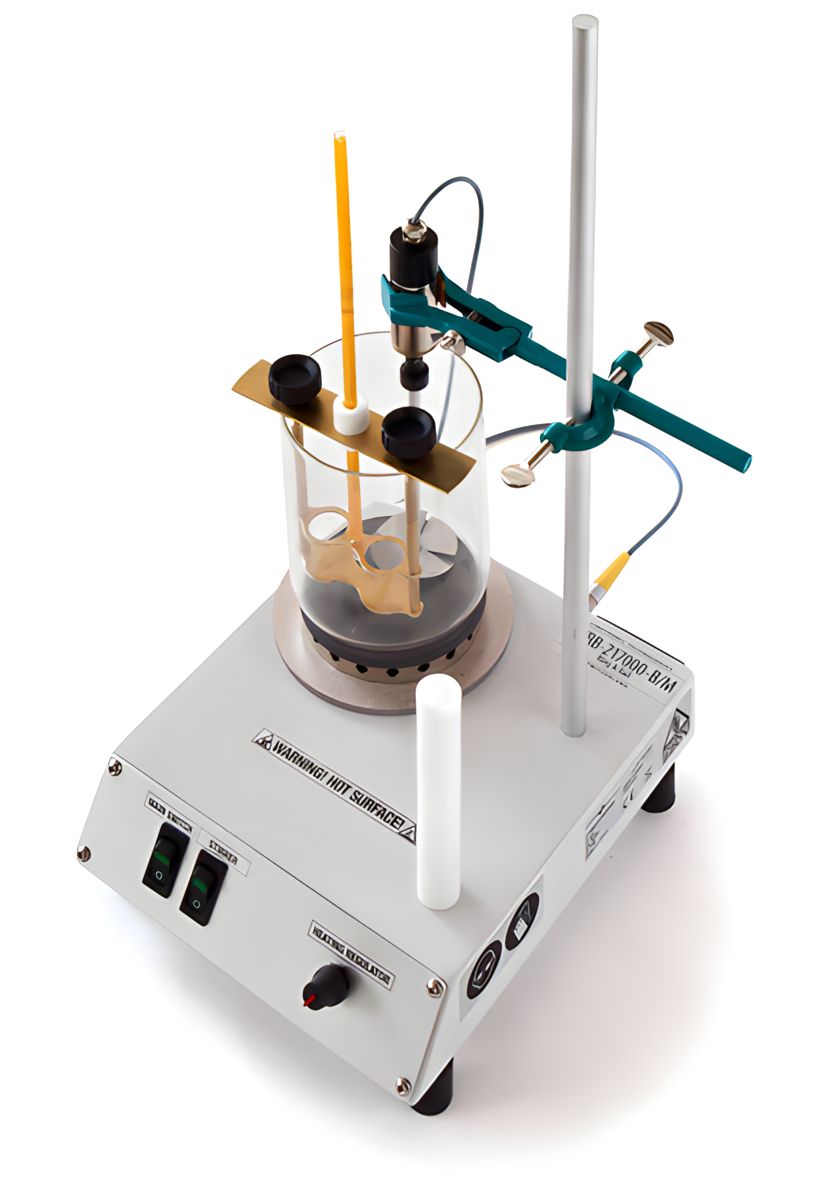
Ring and Ball Apparatus

ASTM D36
IP 58-B

Ring and Ball Apparatus

Softening Point of Bitumen (Ring and Ball Apparatus)

This test method covers the determination of the softening point of bitumen in the range from 30 to 157°C (86 to 315°F) using the ring and ball apparatus immersed in distilled water (30 to 80°C), USP glycerine (above 80 to 157°C), or ethylene glycol (30 to 110°C).

  • Pyrex® jar ∅ 85 × 130 mm
  • Two-places brass cage adjustable in height
  • 2 hardened steel balls ∅ 9.5 mm
  • 2 rings with collar for centring the balls
  • Heating device unit and motor stirrer

Automatic Karl Fisher Coulometric Titrator

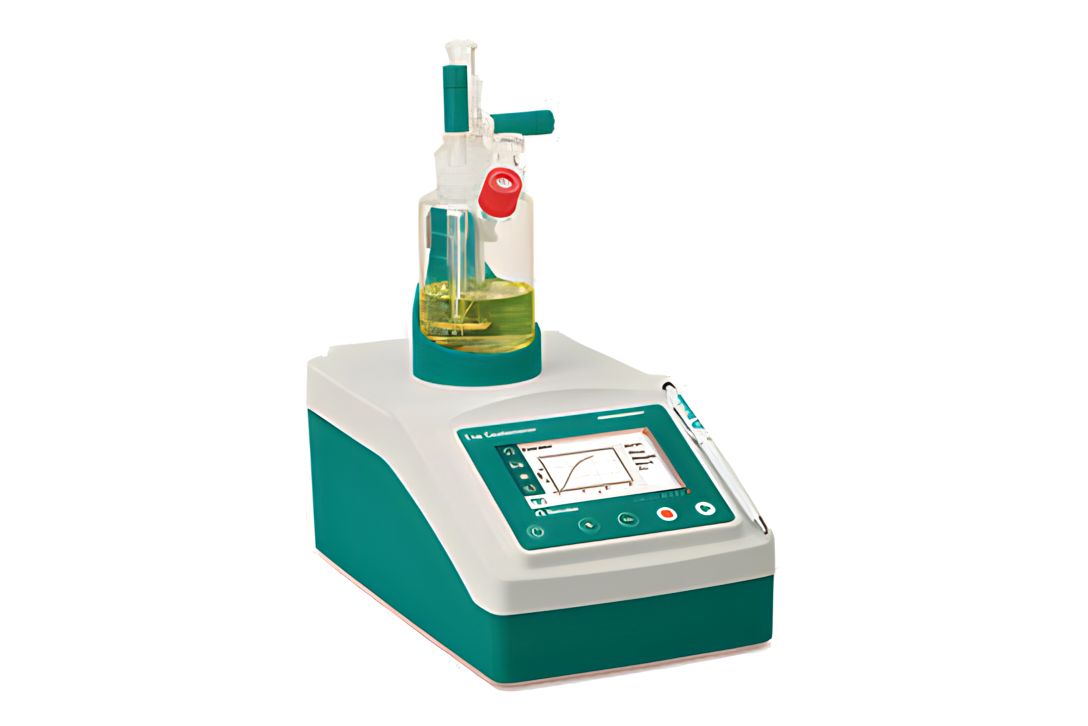
2.1028.0110

The Eco Coulometer with integrated magnetic stirrer and touch-sensitive display is ideal for water content determination in the 10 µg to 200 mg absolute water range. Predefined methods enable a smooth and easy instrument start-up. In addition to GLP-compliant printouts on paper or as PDFs, the Eco Coulometer also offers the option of being able to connect balances or send determination data to a PC via PC / LIMS reports. Indicator electrode and generator electrode without diaphragm are included in the scope of delivery. Coulometry is the ideal method for water content determination in the trace range in liquids, solids and gases. In addition, coulometry is an absolute method making titer determination unnecessary. When it comes to methods for water determination, Karl Fischer titration is the gold standard. Whether your matrix is chemicals, petrochemicals, plastics, or others – coulometric Karl Fischer titration is described by dozens of national and international norms and standards such as EN, ISO, ASTM, DIN, and others.

There are three main reasons, why this is so:
  • Karl Fischer titration is a direct method and specific for water (low risk of matrix interferences)
  • It is highly sensitive (detection limits in the micrograms range)
  • It is fast (generally, less than 3 minutes per sample)

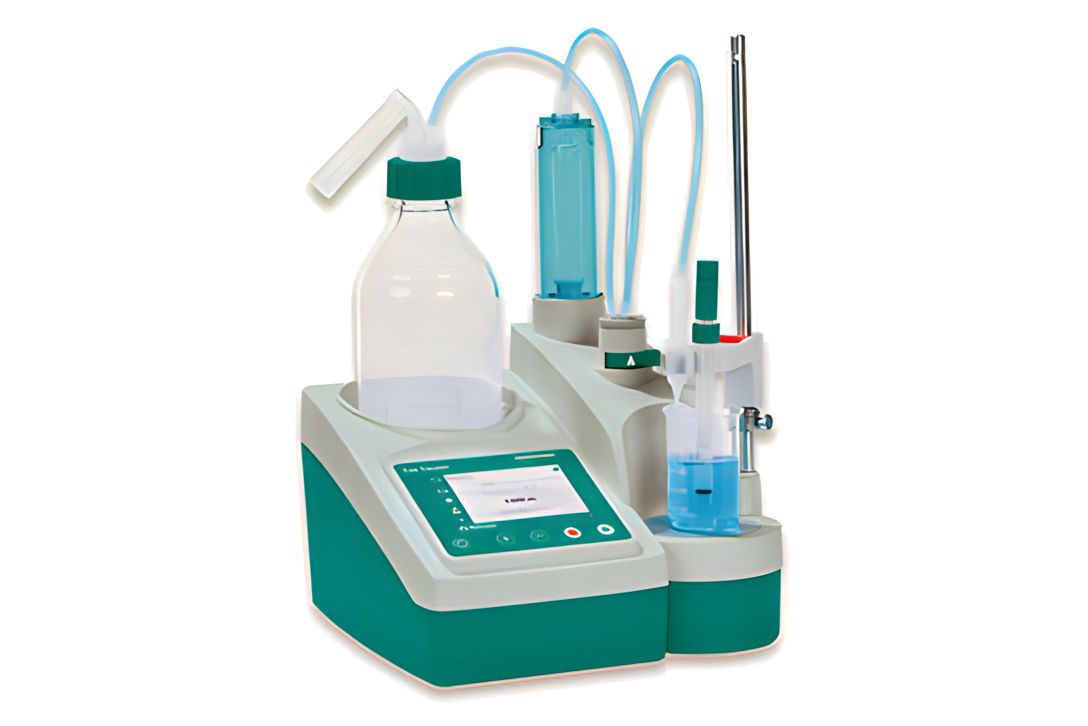
Automatic TBN Titrator

2.1008.3010

The compact Eco Titrator with integrated magnetic stirrer and touch-sensitive User Interface is ideal for routine analysis. It provides GLP-compliant results with minimum space requirements at all times.

The Eco Titrator Oil offers you the complete package for the determination of the acid or base number in petrochemical products. Included in the package are titrators and a 20 mL cylinder unit as well as a Solvotrode EasyClean, a robust, combined pH electrode specially developed for nonaqueous acid-base titration.

A SIMPLE AND RELIABLE ROUTINE You can save up to 120 titration methods on your Eco Titrator. Simply select the required method, enter the sample size, and press the start button – that’s it. The Eco Titrator performs the analysis fully automatically.

  • Touch sensitive user interface
  • Routine and expert user mode to protect your methods and prevent user errors
  • Button to directly control the speed of the stirrer

HOTPLATES

  • With Certificate & Traceability : Controlled by serial number, certificate, delivery-information, and traceable data base system.
  • Digital feedback control by high-performance microprocessor.
  • Patented Jog-Shuttle control system.
  • User’s self-compensation function : to control difference between real temp. and indicated temp. (±20.0℃).
  • Storage function for the set values : temp. and timer
  • Locking mode supported for experimental safety (Input to Jog-Shuttle can be disabled).
  • Superior temperature uniformity : less than 10% on the plate at ambient temperature.

DIGITAL OVERHEAD STIRRER

  • Powerful DC motor for various stirring applications (direct-driven or worm-geared).
  • The direct driven motor ensures high-speed at all recommended viscosities.
  • Digital feedback controller.
  • Steady and constant stirring speed.
  • Chrome-plated stainless steel chuck to prevent corrosion.
  • Anti-trembling system - the impeller is fixed at two points within the body and chuck.
  • Adjustable impeller position (height).
  • Motor overload and overheat protection for highest safety and long lifetime.
  • Available as set with impeller, plate stand and clamp.
  • Many different impellers and plate stands available.

OVENS

  • CE Certified
  • 3-Side Heating Zone : The Best Temp. Uniformity & Accuracy by High PerformanceHeating Mechanism
  • Digital Fuzzy Control System Implementing Superior Temperature Accuracy.
  • Optimized Air Flow by Gravity-air Mechanism
  • Patented Jog-Dial Control System
  • Suitable for Drying, Baking, Conditioning, Curing, Pre-Heating and Aging
  • The Best Temp. Uniformity & Accuracy by High Performance Heating Mechanism : 3-Side Heating
  • New Jog-Dial with Push Button ,Compact New Body Design
  • Stainless-steel Wire Shelves Included
  • Alarm Function : Error status and Timer-end
  • RS232C Interface for Monitoring and Controlling with PC
  • Ambient +5℃ to 230℃ Range with Fluctuation of ±0.5℃ at 100℃
  • Storage Function of Temperature and Timer setting values
  • Locking Mode Supported for Experimental Safety (Input to Jog-Dial can be disabled)
  • Corrosion Resistant 304 Stainless-steel Chamber
  • Over Temperature & Over Current Protection, Sensor Error Detection

ANALYTICAL BALANCE

Analytical balances have a weighing capacity ranging from 62g to 320g and a minimum readability from 0.01mg to 0.1mg. They are widely used in government, university, and private company laboratories and quality control departments. They are also used for weighing reagents and samples, and measuring mass change and density in pretreatment processes before the use of analytical instruments. Specifically, they are used to weigh reagents and samples before analysis when using LC/HPLC, LC/MS, GC/MS, UV, thermal analyzers, and TOC analyzers.

Analytical balances have a weighing capacity ranging from 62g to 320g and a minimum readability from 0.01mg to 0.1mg. They are widely used in government, university, and private company laboratories and quality control departments. They are also used for weighing reagents and samples, and measuring mass change and density in pretreatment processes before the use of analytical instruments. Specifically, they are used to weigh reagents and samples before analysis when using LC/HPLC, LC/MS, GC/MS, UV, thermal analyzers, and TOC analyzers.

Digital Precise Refrigerated/Heating Bath Circulator

CE certified, these Digital Precise Refrigerated/Heating Bath Circulators possesses advanced refrigeration systems that ensures temperature performance as well as an innovative powerful circulation pump that ensures temperature uniformity.

MUFFLE FURNACE

Digital Muffle Furnaces are well-built with digital PID control system, patented jog-shuttle control system and digital LCD with back-light function. The 4-side heating mechanism ensure the short heat-up time and high temperature uniformity, and the maximum temperatures are 1,000℃ for FPX model and 1,200℃ for FHX model.


Glass Expansion

Glass Expansion is the leading ICP consumables manufacturing company. We have been manufacturing sample introduction components for ICP emission and mass spectrometers. Cost effective and reliable results can be assured with excellent precision with our products

Products

  • ICP consumables
  • Torch
  • Spray Chamber
  • Nebulizer
  • Tubings
  • MS Cones

ICP Quartz Torch

ICP and ICP-MS

ICP-MS cones

Concentric Nebulizer

Laboratory Glasswares

Products

  • Bottles
  • Flasks
  • Burettes
  • Cylinders
  • Vials
  • Pippettes
  • Funnel

Sample Cups

Products

FUME CONTAINMENT

Labsys is there to guarantee the highest level of fume containment that is well able to eradicate all different types of gaseous contaminants so that the users do not breathe in hazardous air.
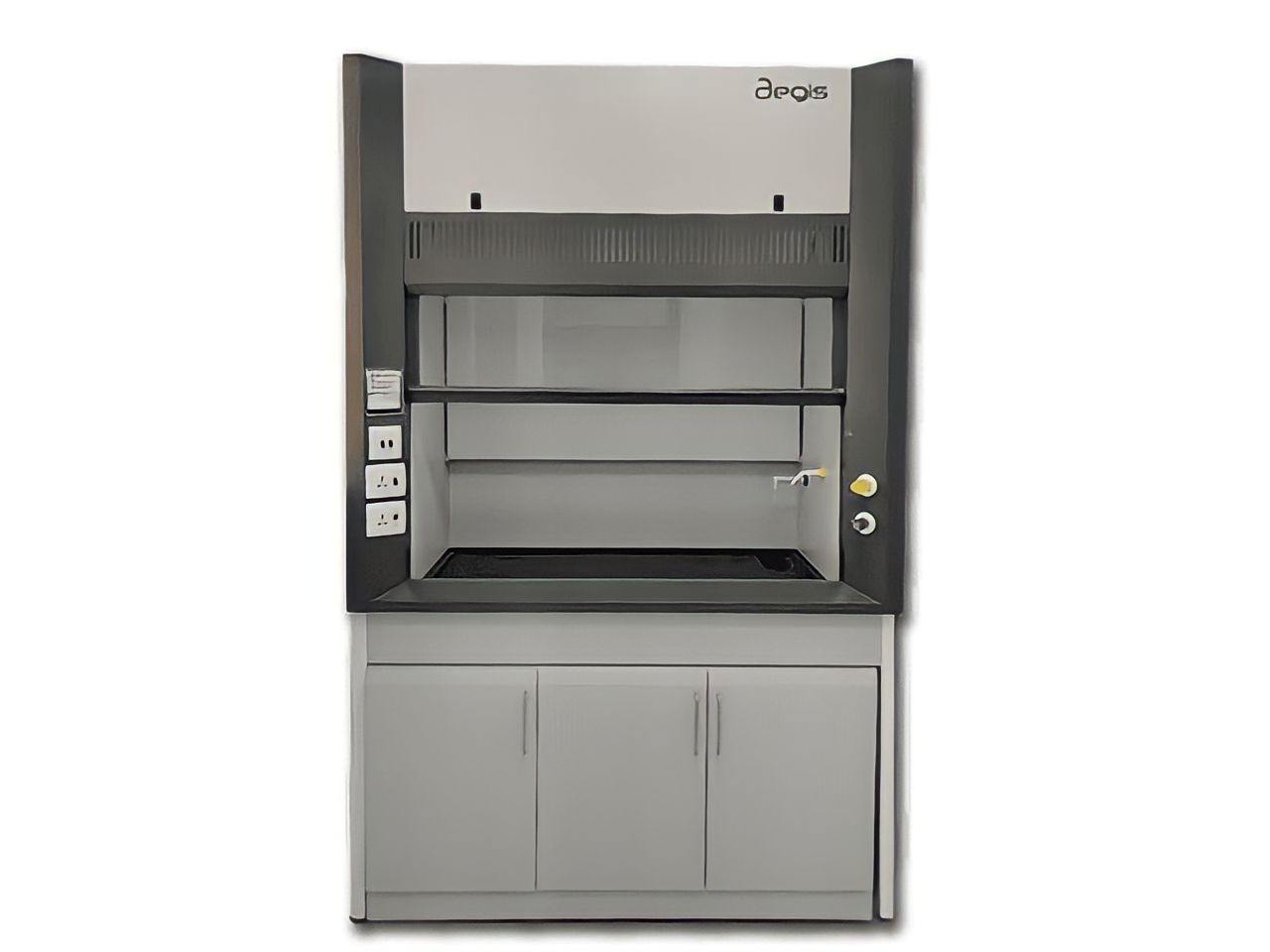
  • Aerodynamic design to promote airflow
  • Optional bypass facility to reduce load on extraction system
  • Wide sash opening for easy handling
  • Smooth and light sash operation
  • Easy access to services, for maintenance
  • Available in different sizes
  • Distinctive styling
  • Under bench acid/base cabinets (optional)
  • HEPA filter and activated carbon filters (optional)

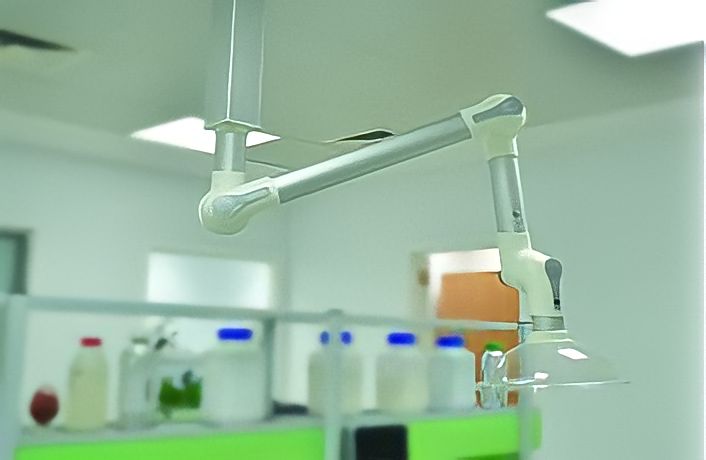
SUCTION ARMS

The flexible arm system of suction arms use friction joints and ball bearing for necessary grip and easy movement. Suction Arms can be fixed on wall/ceiling/worktop with adjustable arms and suction cup.
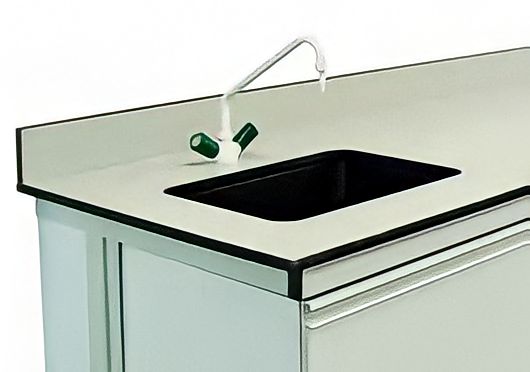
SINKS & DRIPCUPS

  • Lab Sinks and Drip cups shall be selected to match the worktop and application.
  • The varieties of sinks that Labsys offers are – Stainless steel sink, Polypropylene sink, Epoxy sink and Ceramic sink.

WORK BENCHES

The flexible arm system of suction arms use friction joints and ball bearing for necessary grip and easy movement. Suction Arms can be fixed on wall/ceiling/worktop with adjustable arms and suction cup.